Ghana’s Hindu Monastery
Odorkor, Ghana and Rishikesh, North India
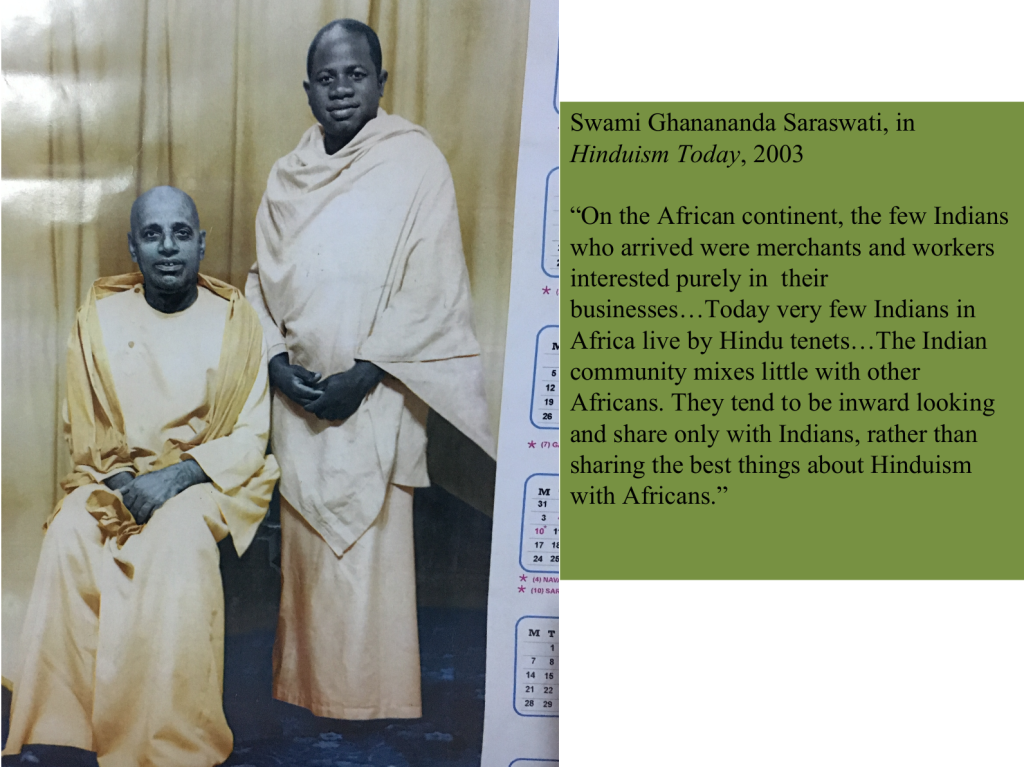
The first African Hindu monk, Swami Ghanananda, was born Kwesi Essel in 1937. Kwesi began collecting whatever Indian talismans and pictures he could find. Wanting more, he wrote to “someone in India” and began receiving pamphlets that were written in unknown languages but had pictures of goddesses and gods to which he was immediately drawn. They reminded him of his mother, he noted, and also Mamme, or Mami Wata, the Western African water deity. During his search in Accra for incense and other goods for a prayer session, he learned of the Divine Life Society in Rishikesh on the Ganges River in the Himalayas, where he eventually went. “A young man at the door of the shop,” he recalled, presumably an Indian shop, “asked what I wanted. I said I want India books. He gave me a Divine Life Society pamphlet.” So Kwesi wrote to the Society in India and gathered funds to be make his way there in 1969. He met Swami Krishnanand Saraswati, who had worked with Gandhi’s campaign to promote Hindi as India’s national language, and, during the Mau Mau crisis, had gone to Kenya to offer spiritual counsel to the Indian diaspora and later to Congo and other African countries. Several years after Kwesi returned to Ghana, Swami Krishnananda traveled there in 1975 to visit the Indian diaspora, and found the Ghanaian guru had formed quite a following of Africans and Indians. Indeed, the resident Indians had recognized Kwesi’s gifts for conducting prayers at which he recited Sanskrit verses and the offering of the sacred light to the deities (aarti). Krishnananda ordained Kwesi as a monk, and Kwesi became Swami Ghanananda. They founded the Hindu Monastery of Africa in Odorkor, Ghana, which became the ashram under the direction of Swami Ghanananda until he died in 2016.
