
Maps
Roman Empire
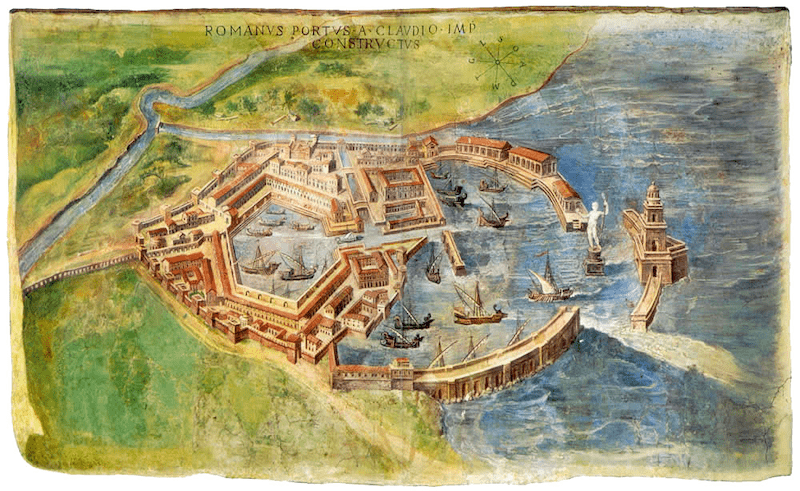
A 16th century fresco in the Vatican Palace shows an idealized reconstruction of Portus’ grand architectural and engineering features.
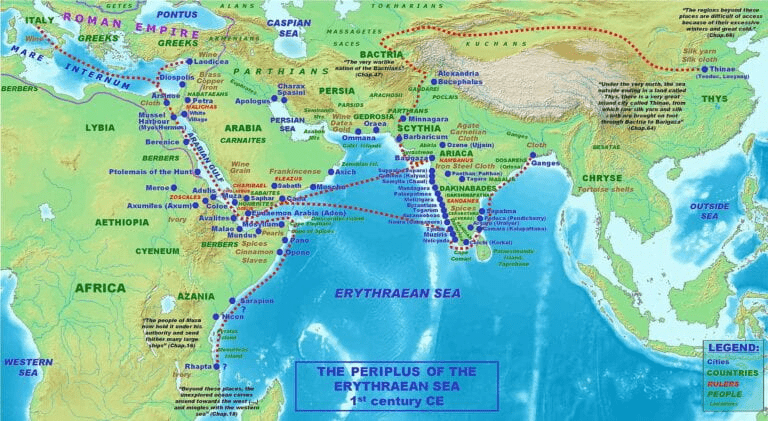
Indian Ocean Connections to Asian Trade: The Periplus of the Erythraean Sea
Turkic Migrations (550-1200)
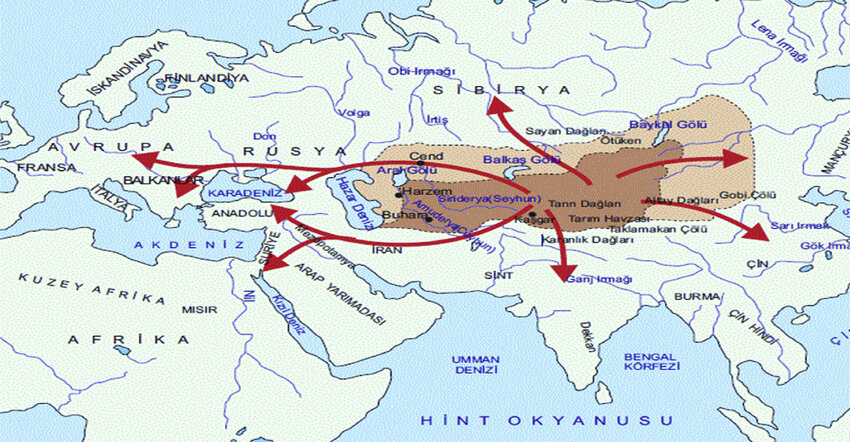
Turkic Migrations (550-1200). In 552 a powerful new Turkic confederacy developed in the Altai Mountains. It spread from China to the Caspian Sea, pushing Bulgarian and Slav nomad warriors deeper into Europe.
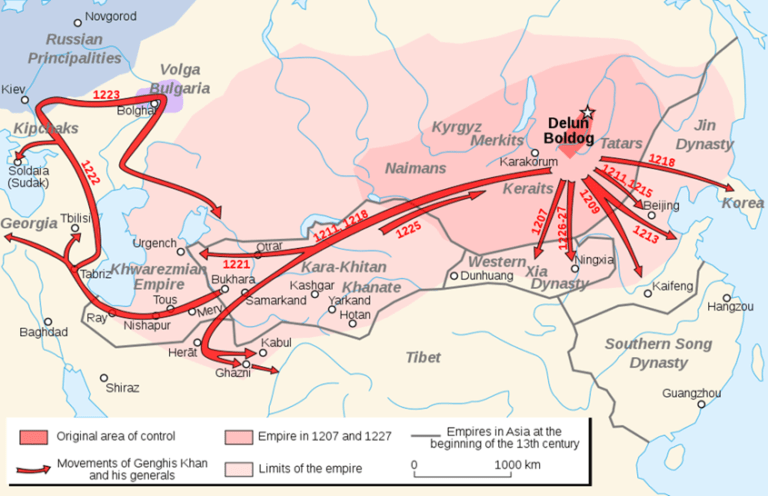
Mongol Imperial Expansion
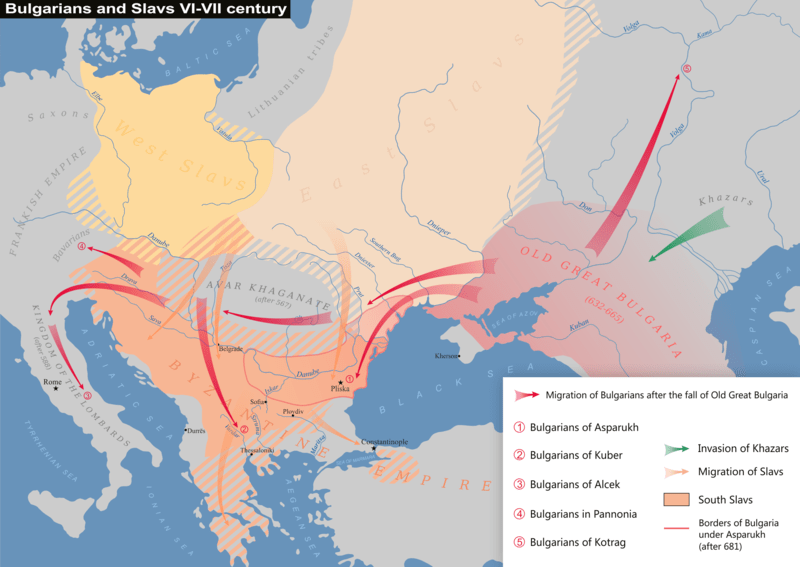
Turkic Migrations (550-1200). In 552 a powerful new Turkic confederacy developed in the Altai Mountains. It spread from China to the Caspian Sea, pushing Bulgarian and Slav nomad warriors deeper into Europe.
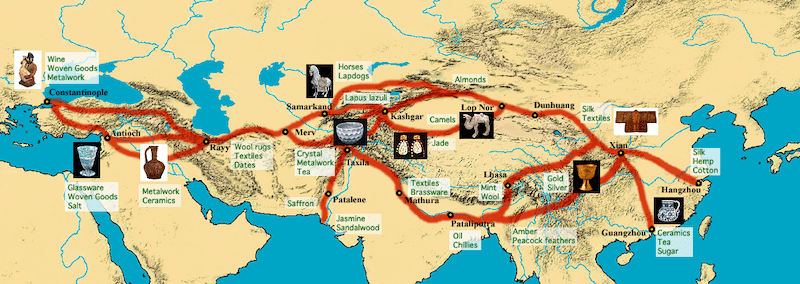
The Height of the “Silk Road”
Marco Polo
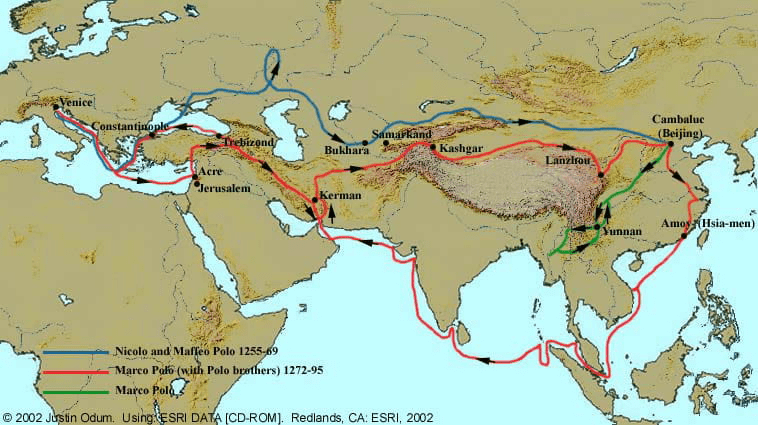
Marco Polo: the Venetian explorer Marco Polo famously used the Silk Road to travel from Italy to China, under the protection of Mongols, arrived in Kublai Khan’s summer palace, Xanadu, in 1275. He spent 24 years in Asia, at Kublai Khan’s court, and returned to Venice, again via the Silk Road routes, in 1295.
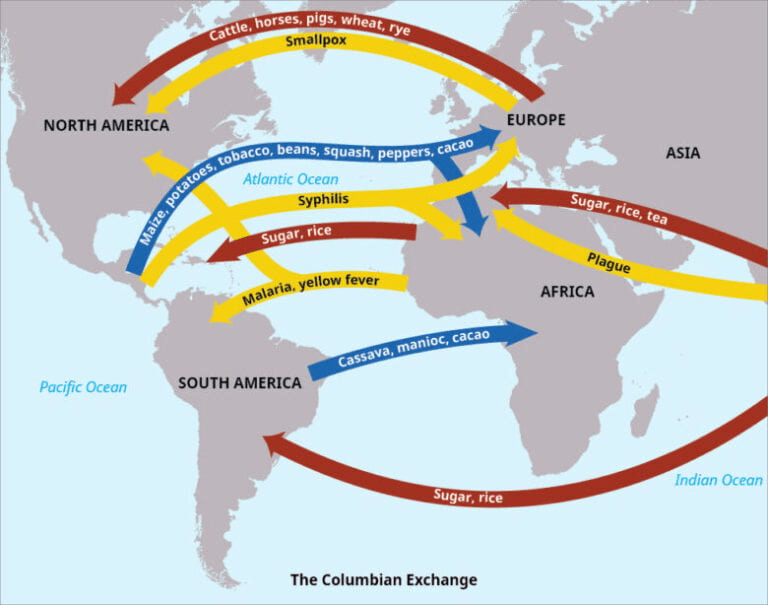
The Columbian Exchange
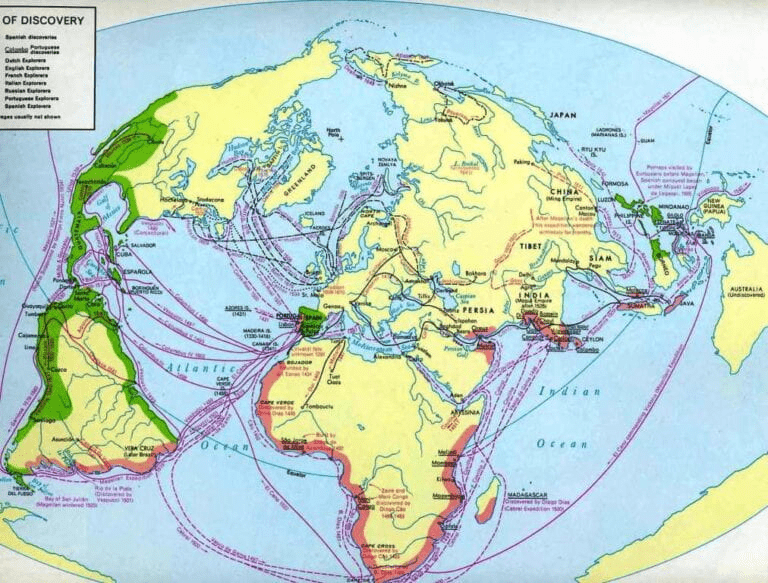
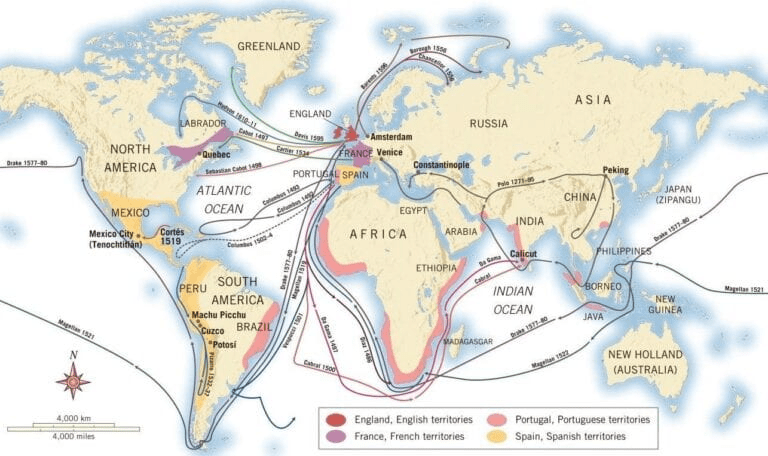
European Seaborne Empire and Exploration: 1500-1850
Cholera
Cholera— in Earth.org: Pandemic cholera began its travels in 1817, in the Ganges Delta, with contaminated rice. In 1837, it reached Kabul, in Afghanistan and Southeast Asia, carried by British Troops, and spread into Iran and Derbent (Russia), on trade routes. In 1845, it crossed the Arabian Sea on ships; it spread north into Iran and Iraq, along the Tigris and Euphrates, and found its way into the Black Sea and Istanbul; from there it traveled to Europe, and in 1848m reached Norway, England, Spain, the Balkans, and North Africa (when pilgrims from cholera-plagued Mecca returned to Egypt). In 1849, it was carried to New York and New Orleans on ships loaded with drinking water.
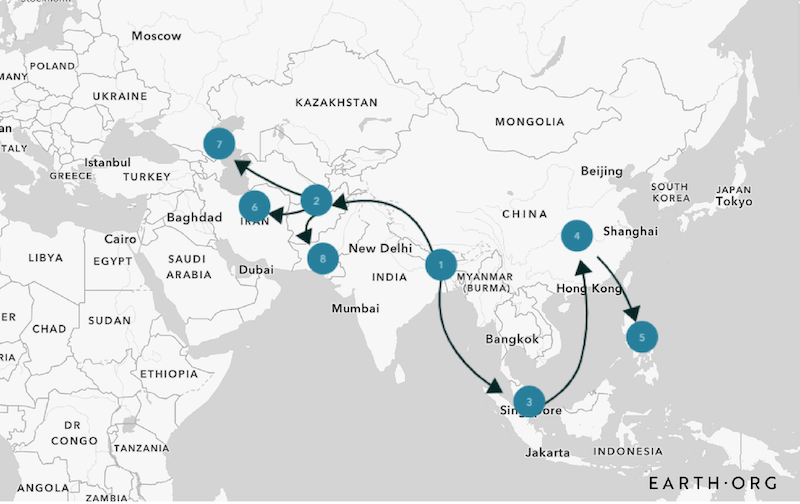
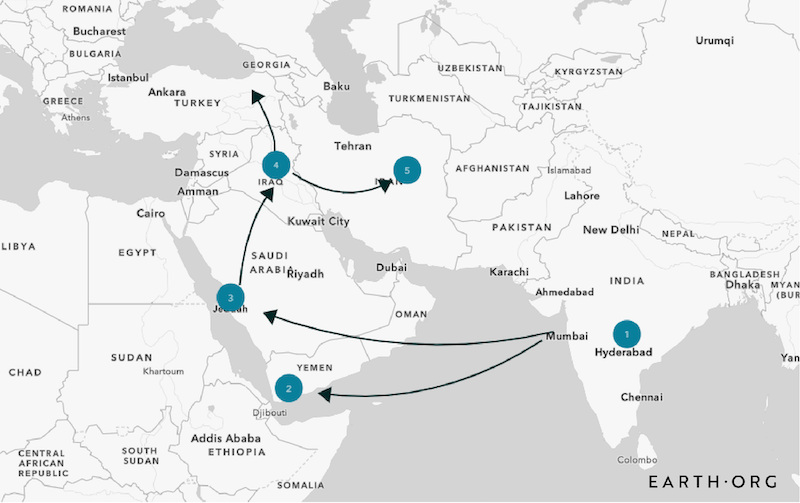
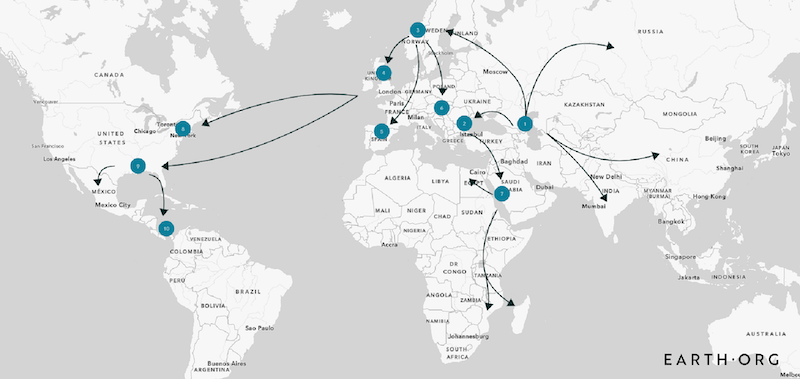
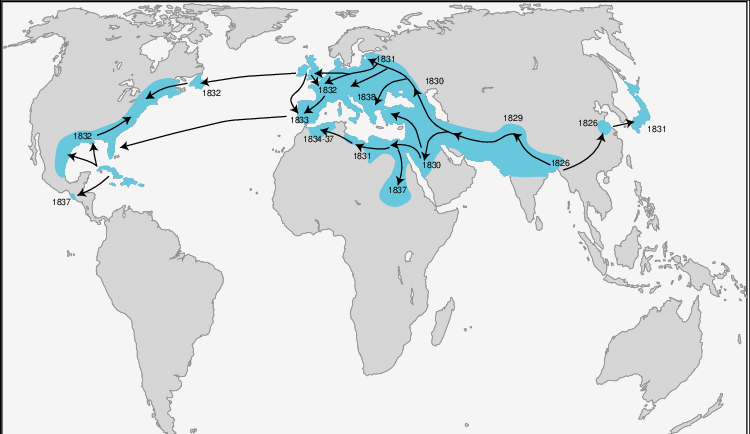
Routes of the second world cholera pandemic (1826-1837)
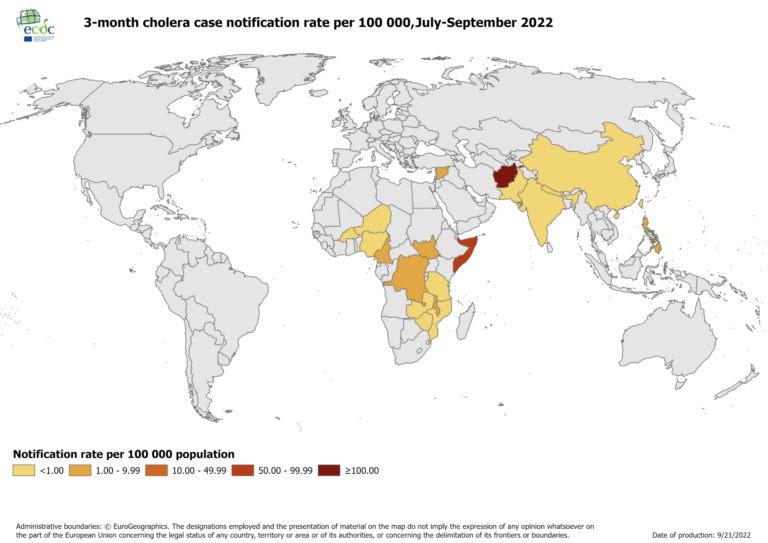
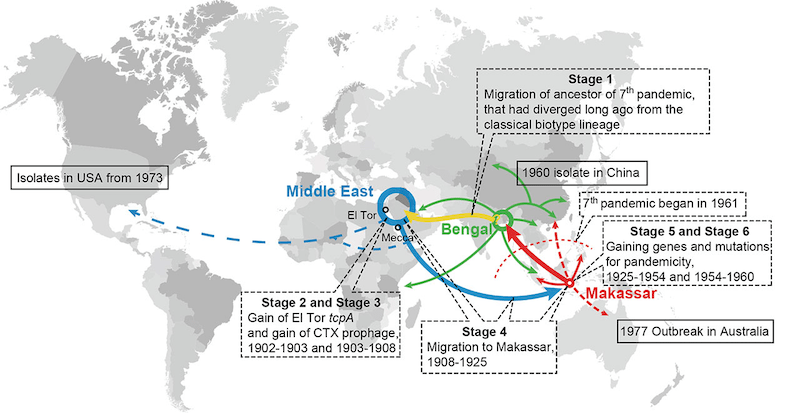
The researchers’ six-stage story of how the seventh cholera pandemic evolved into its modern form around the Middle East and Asia.